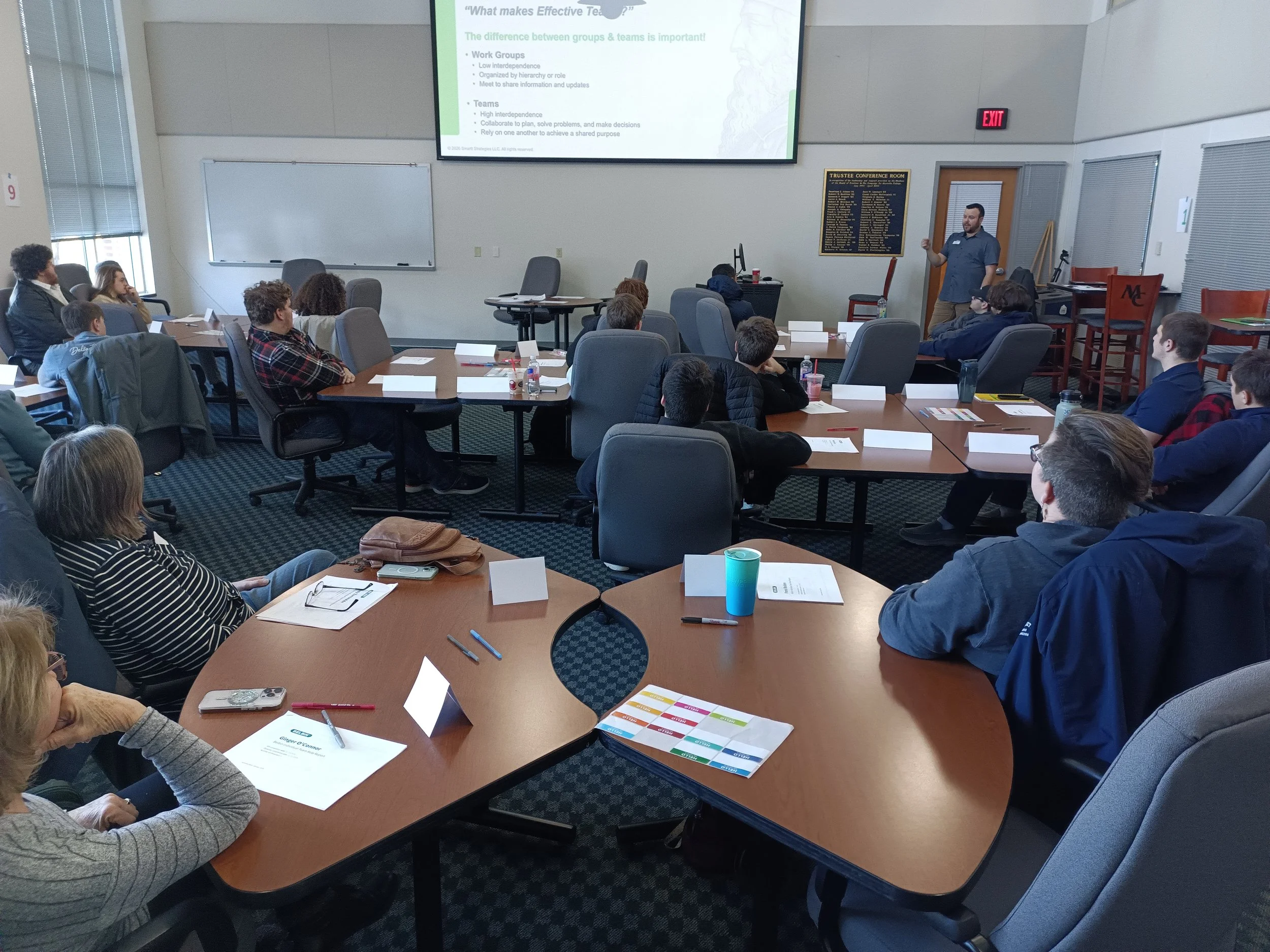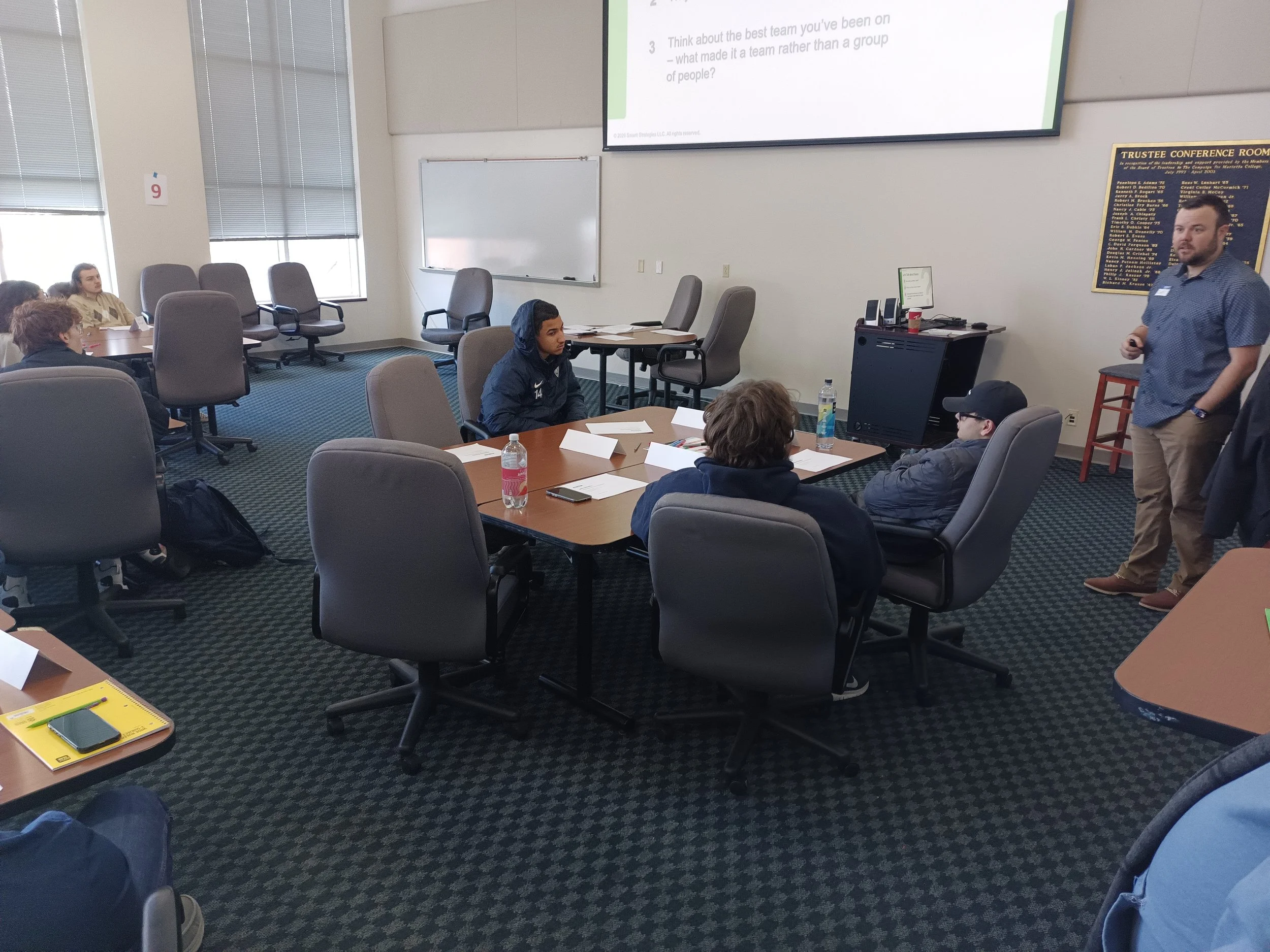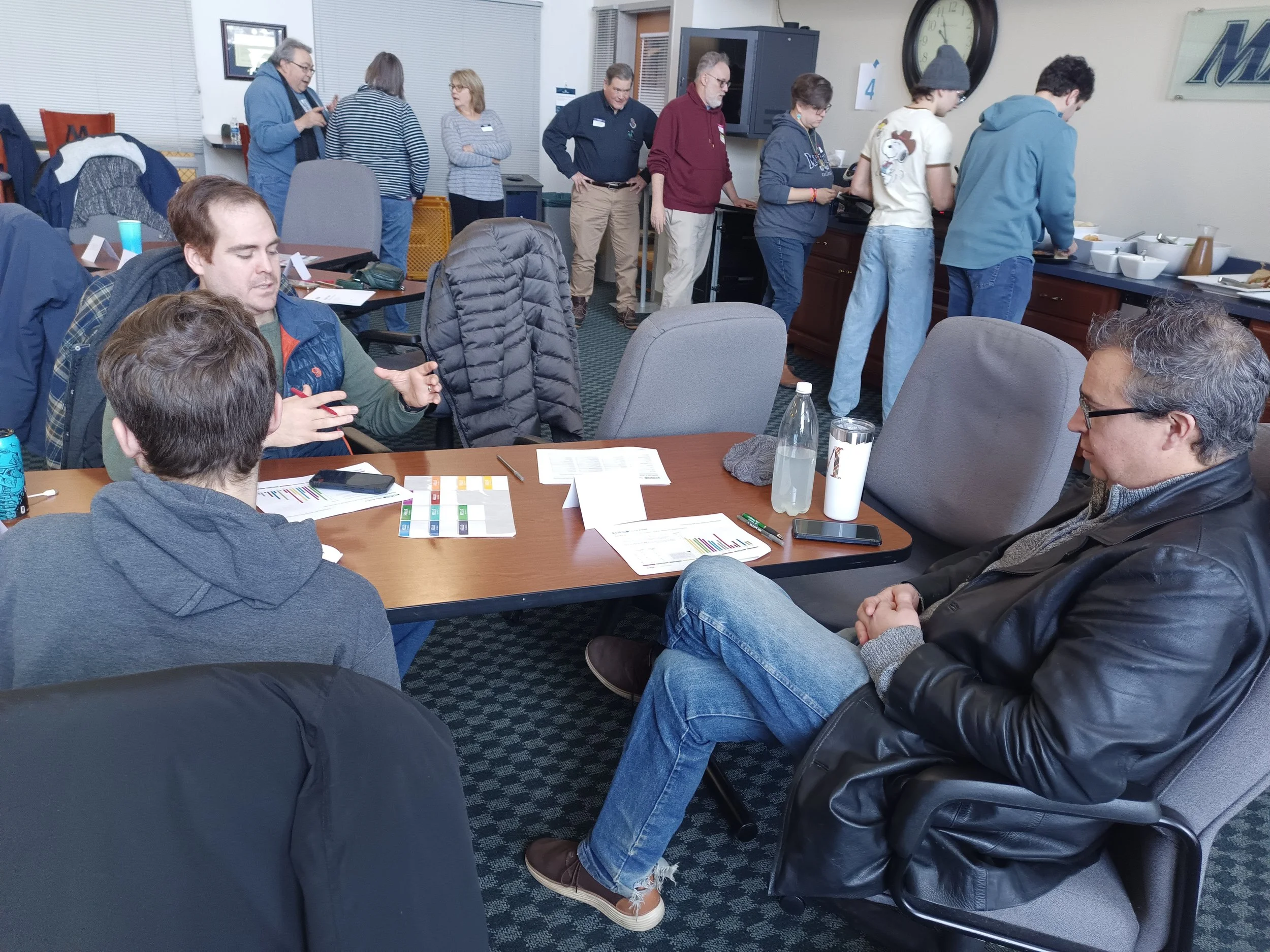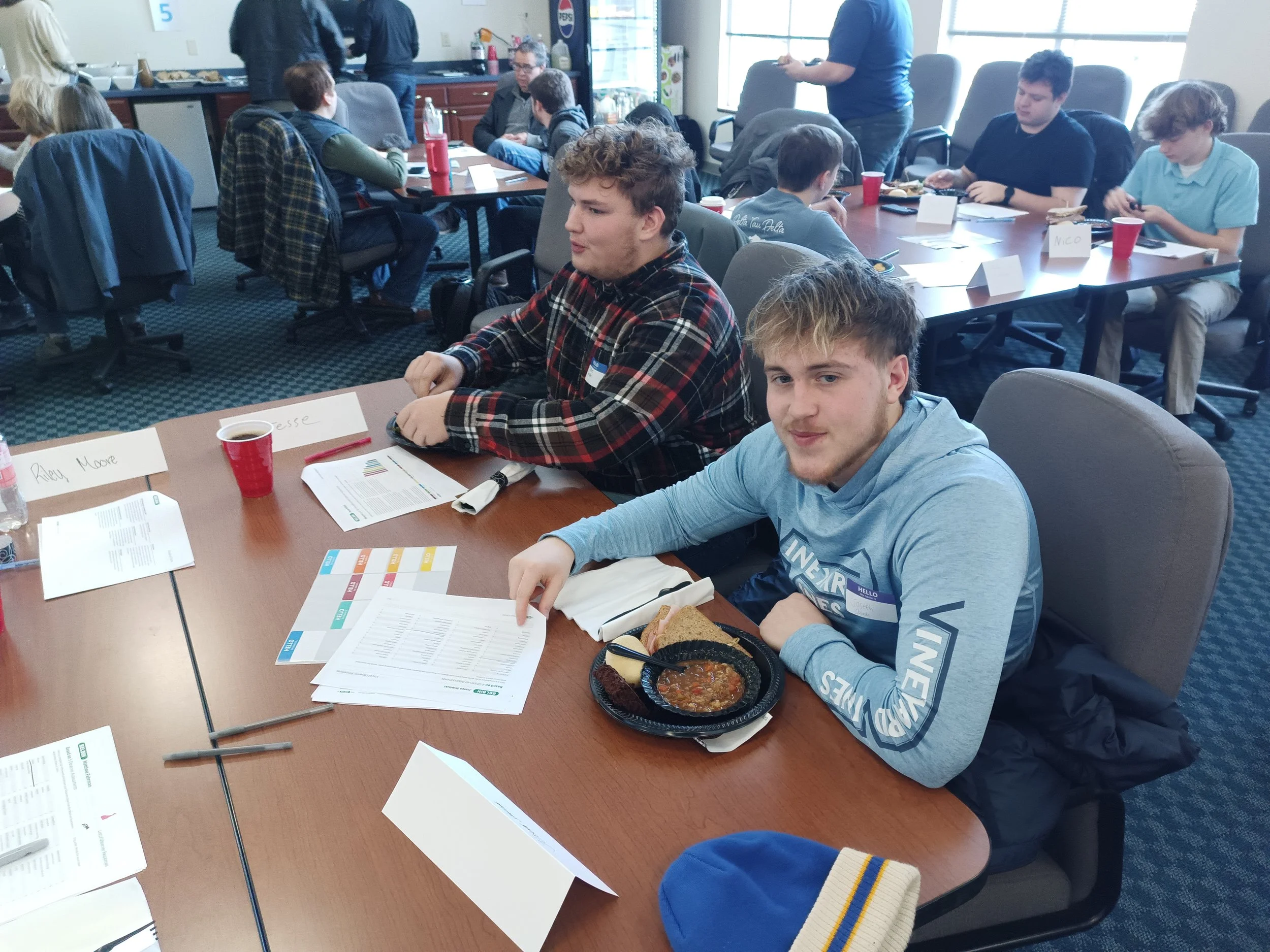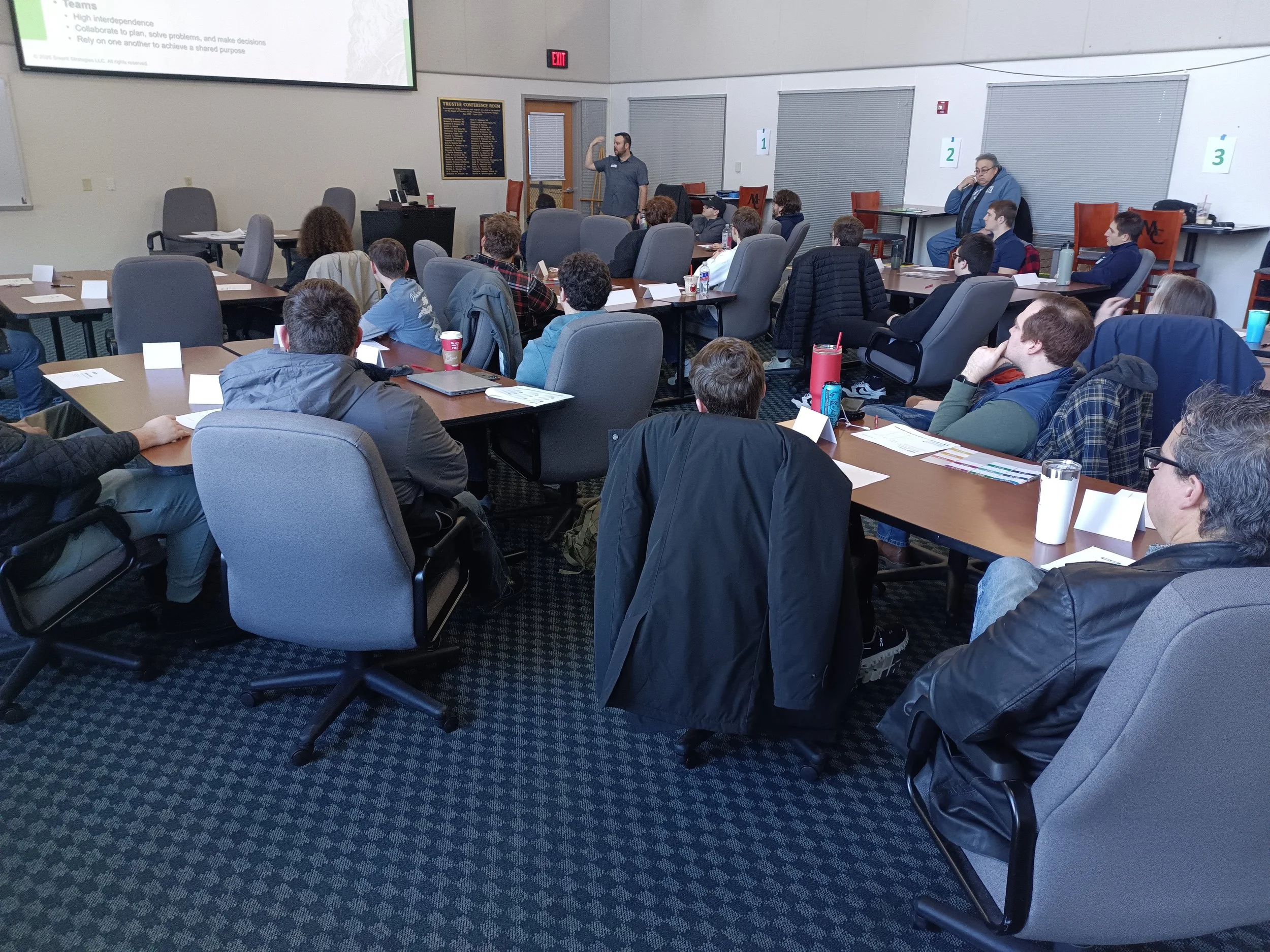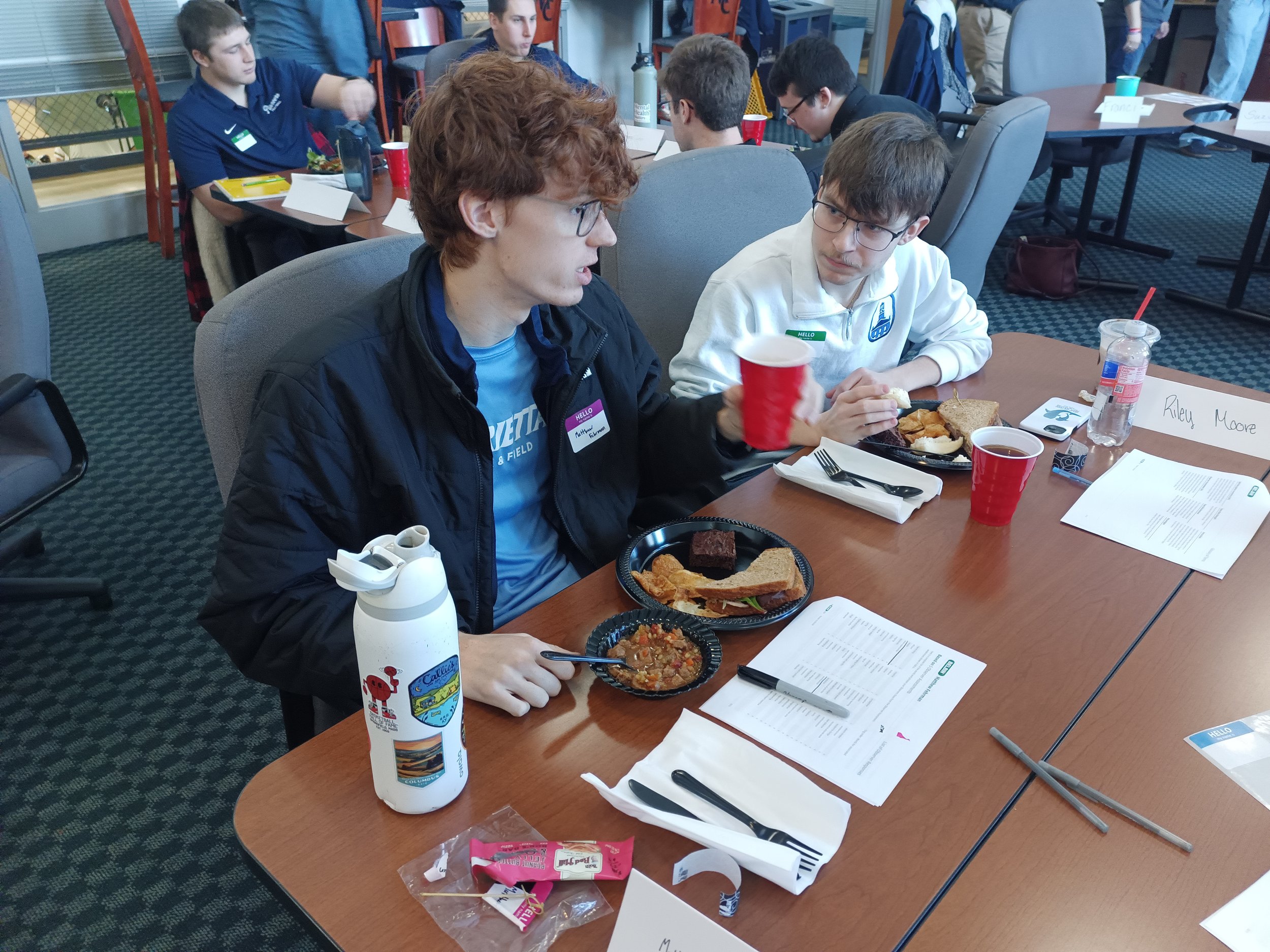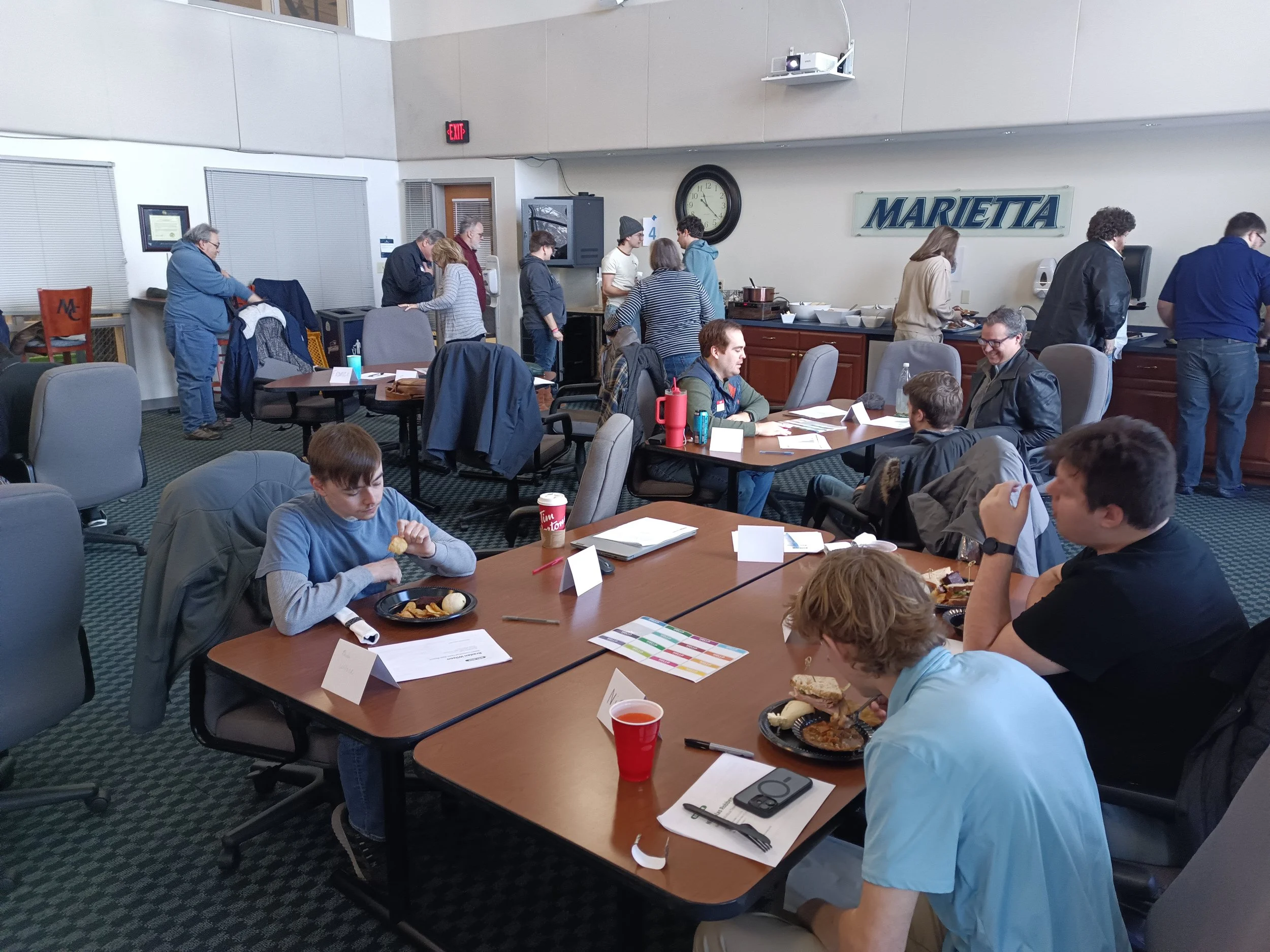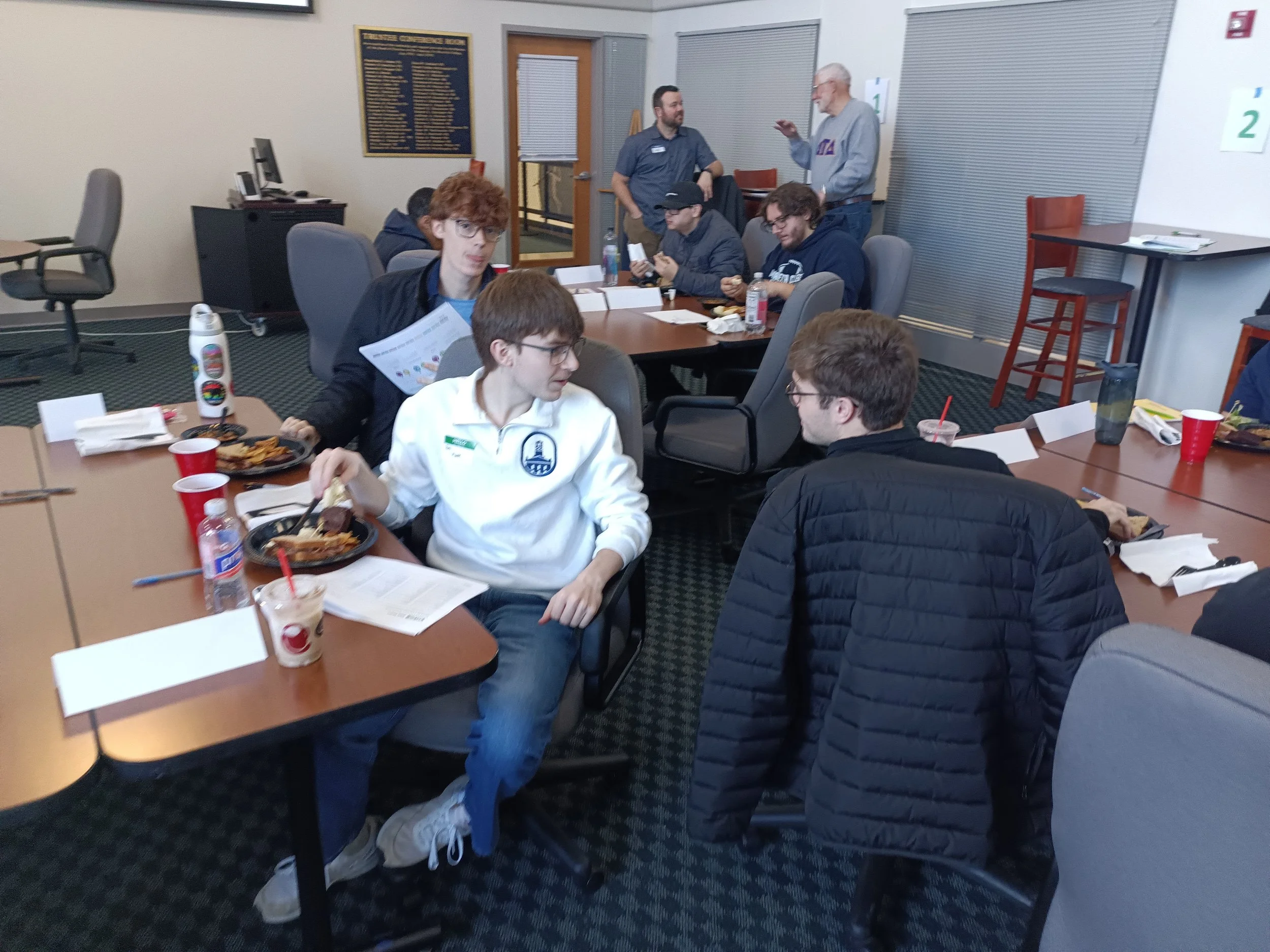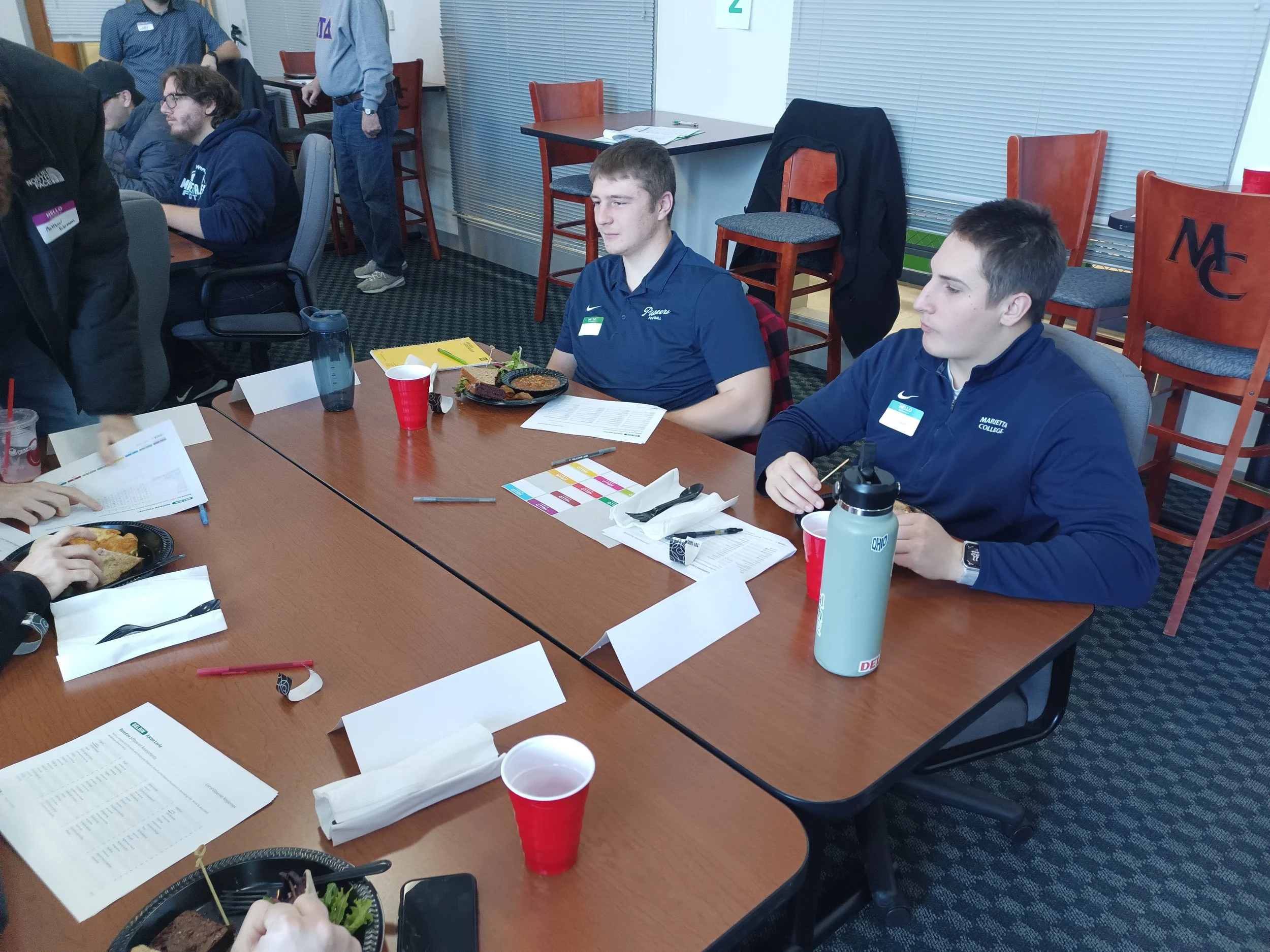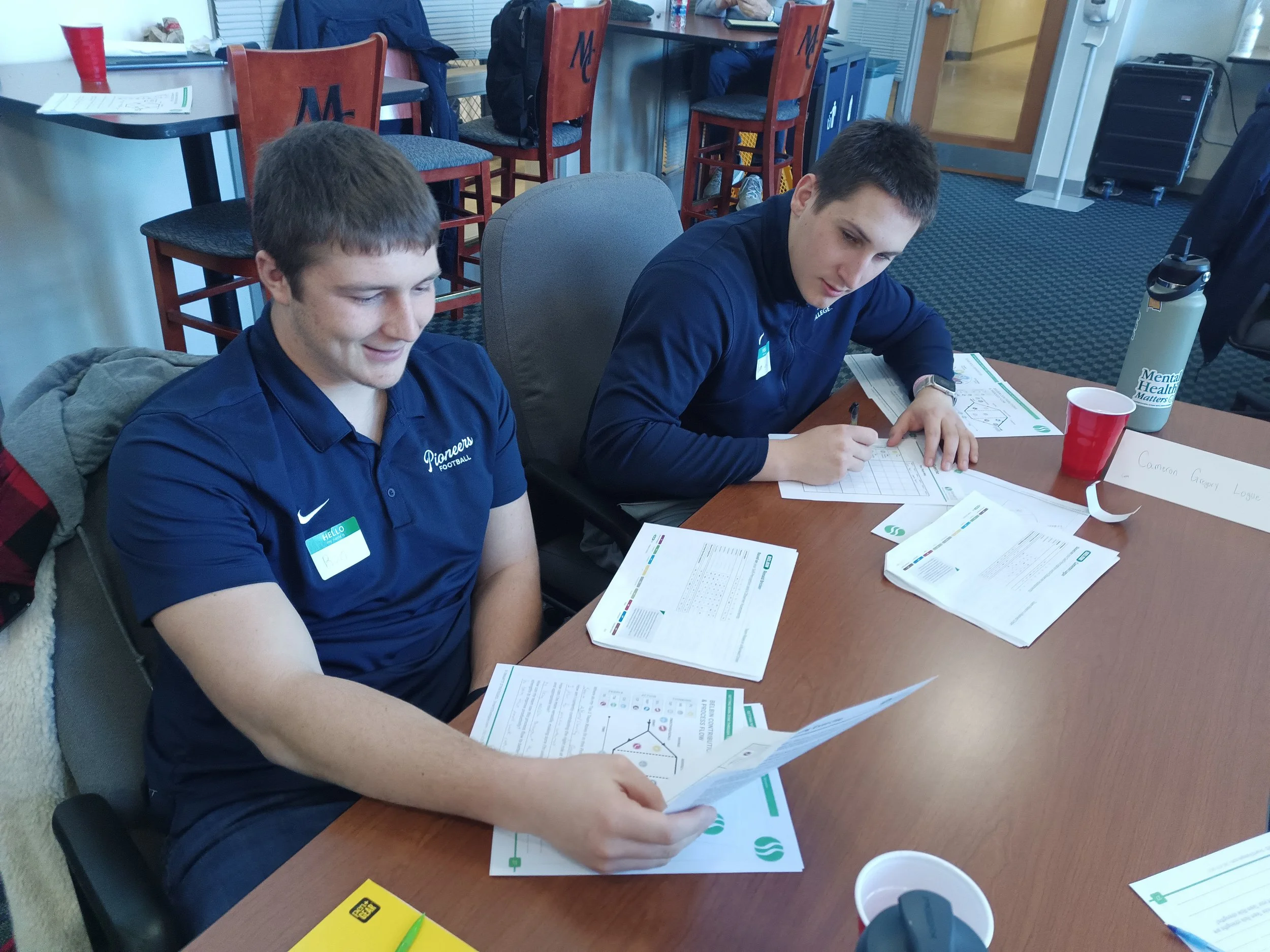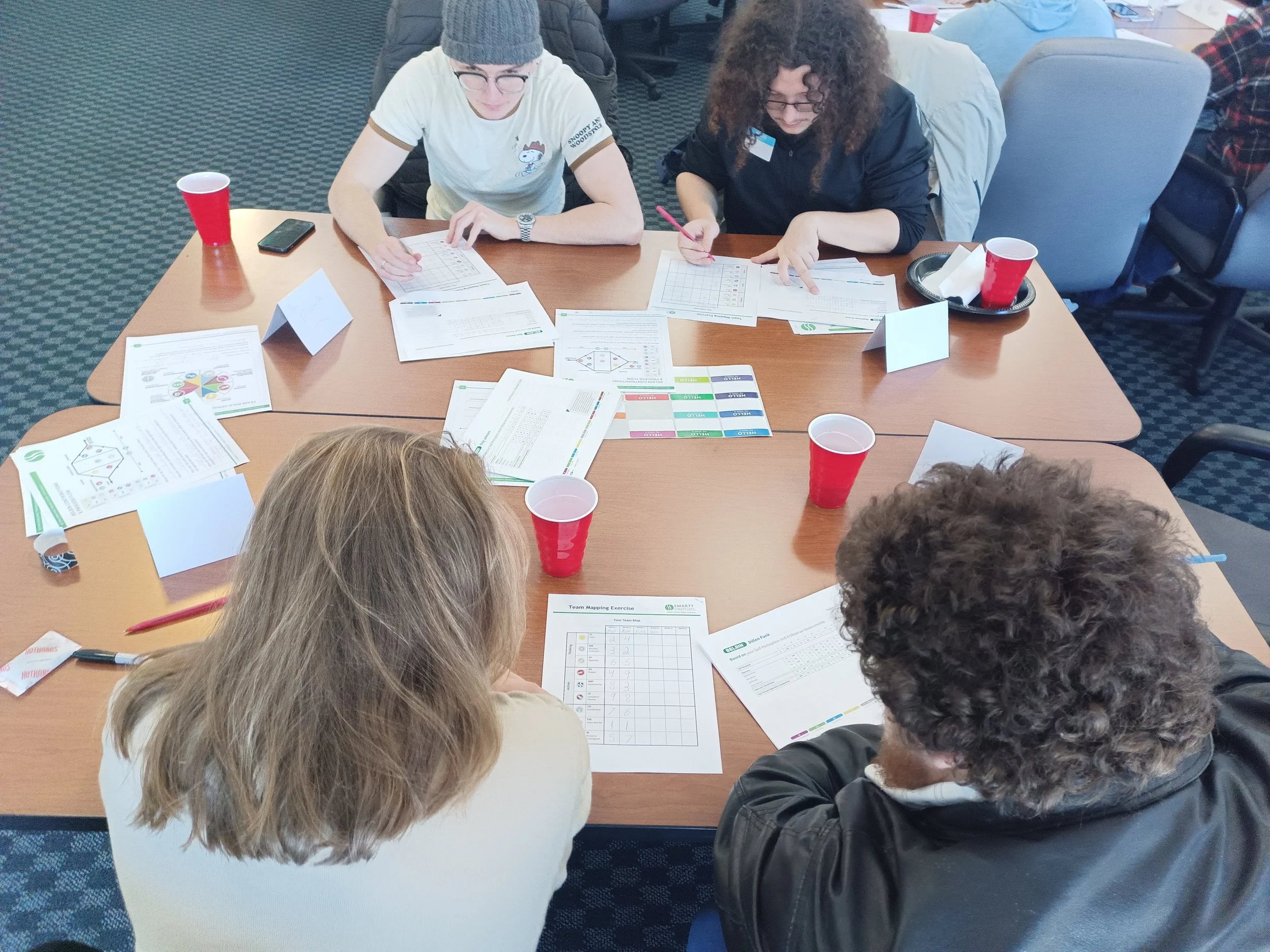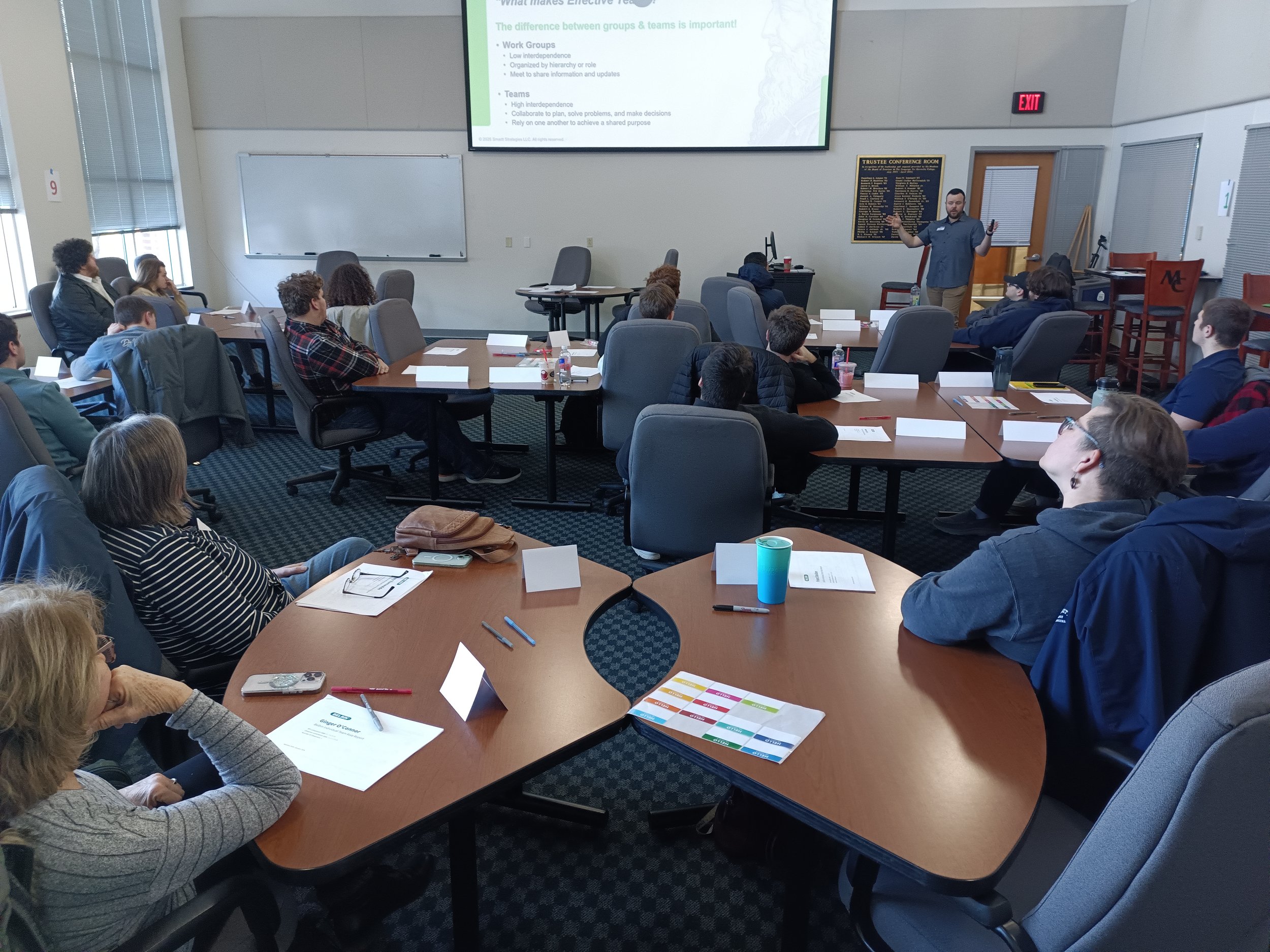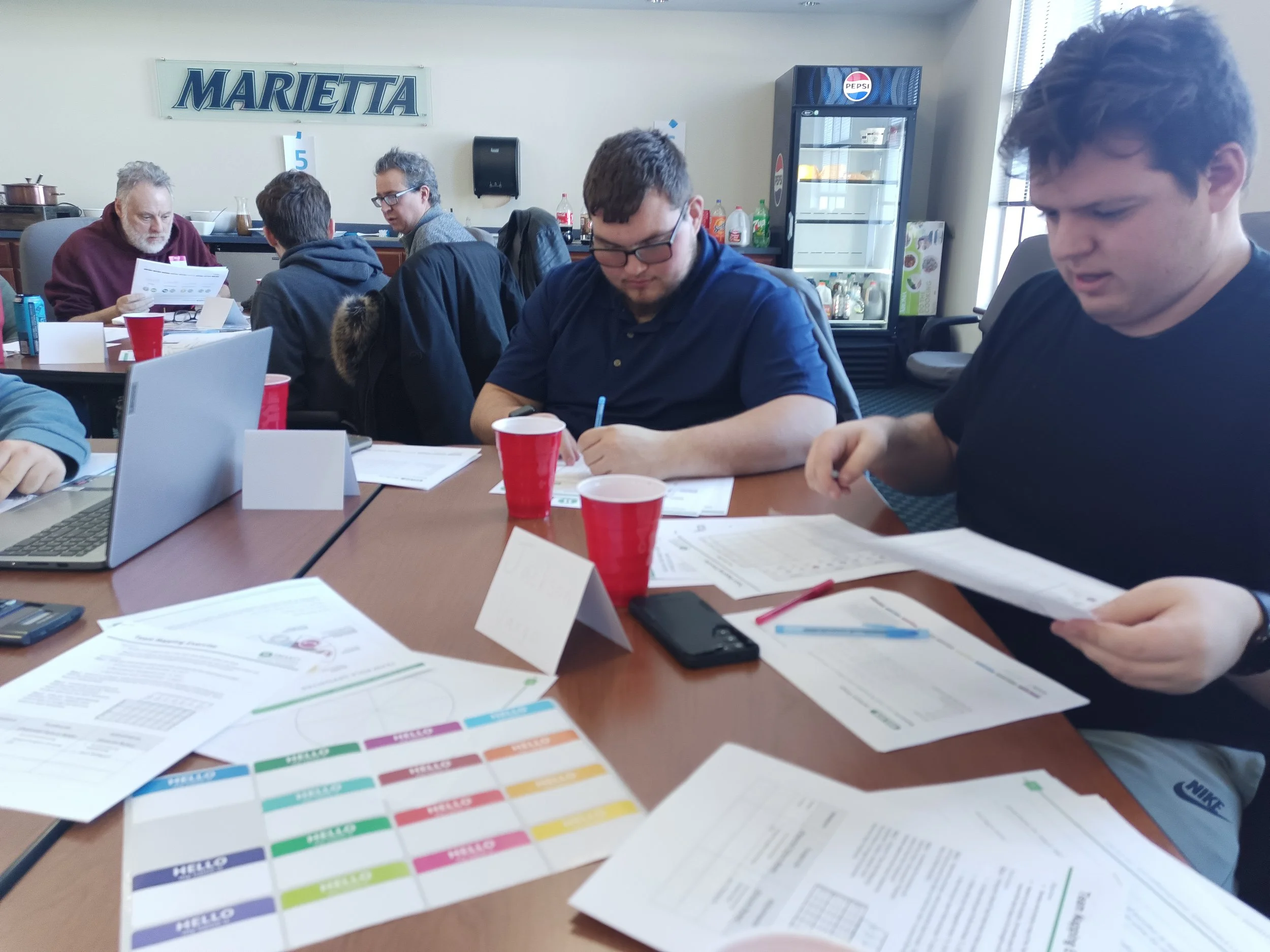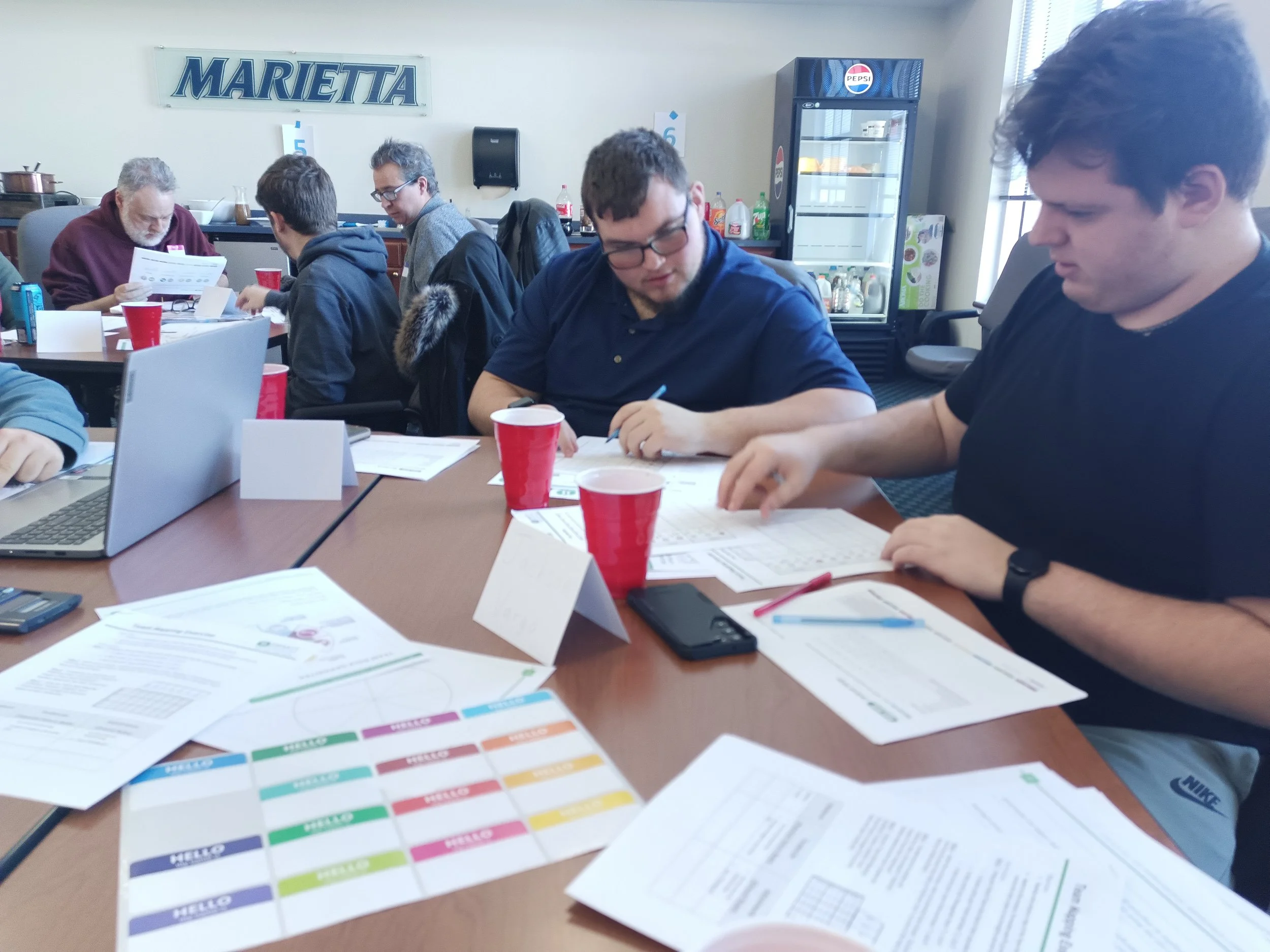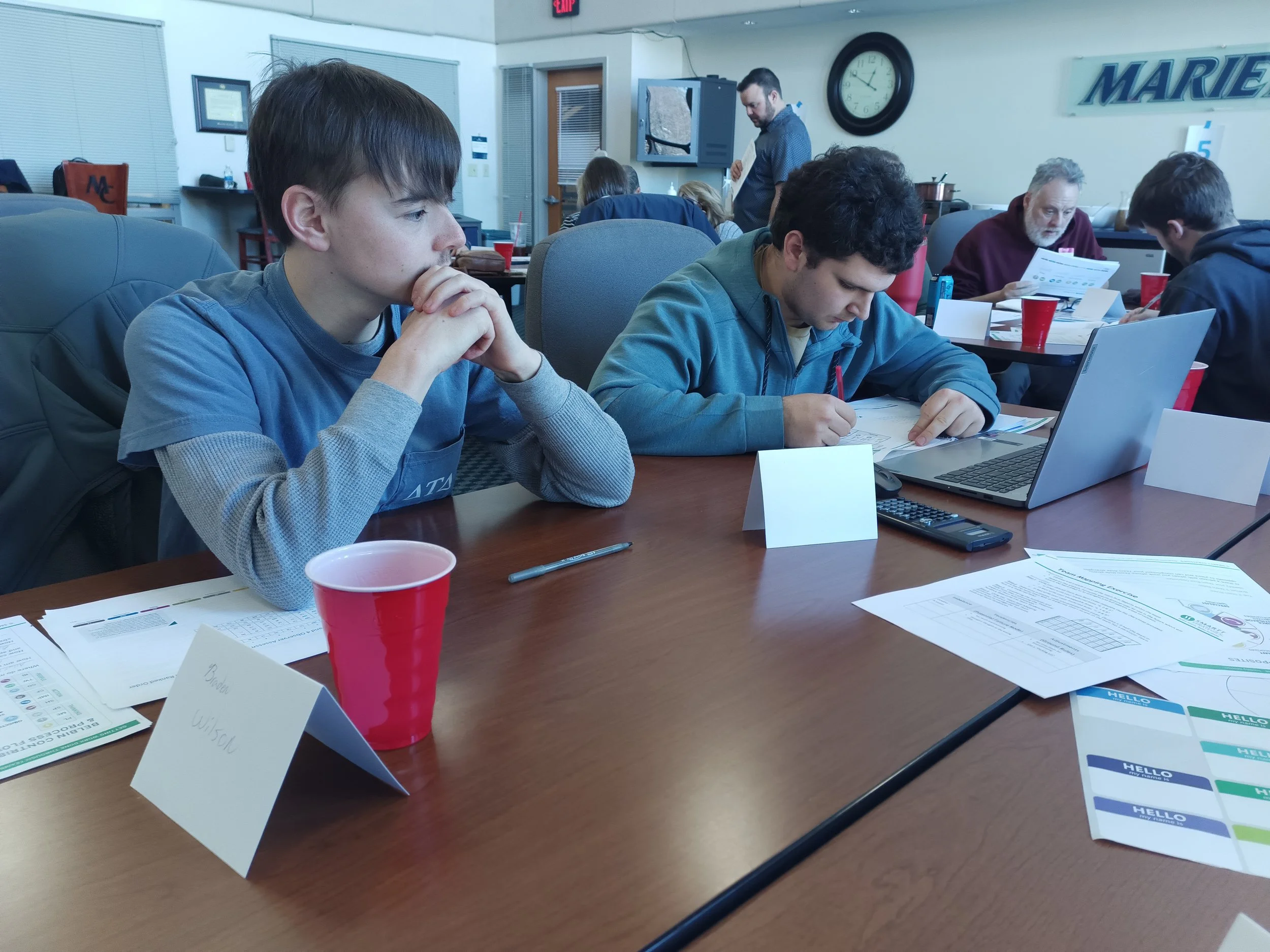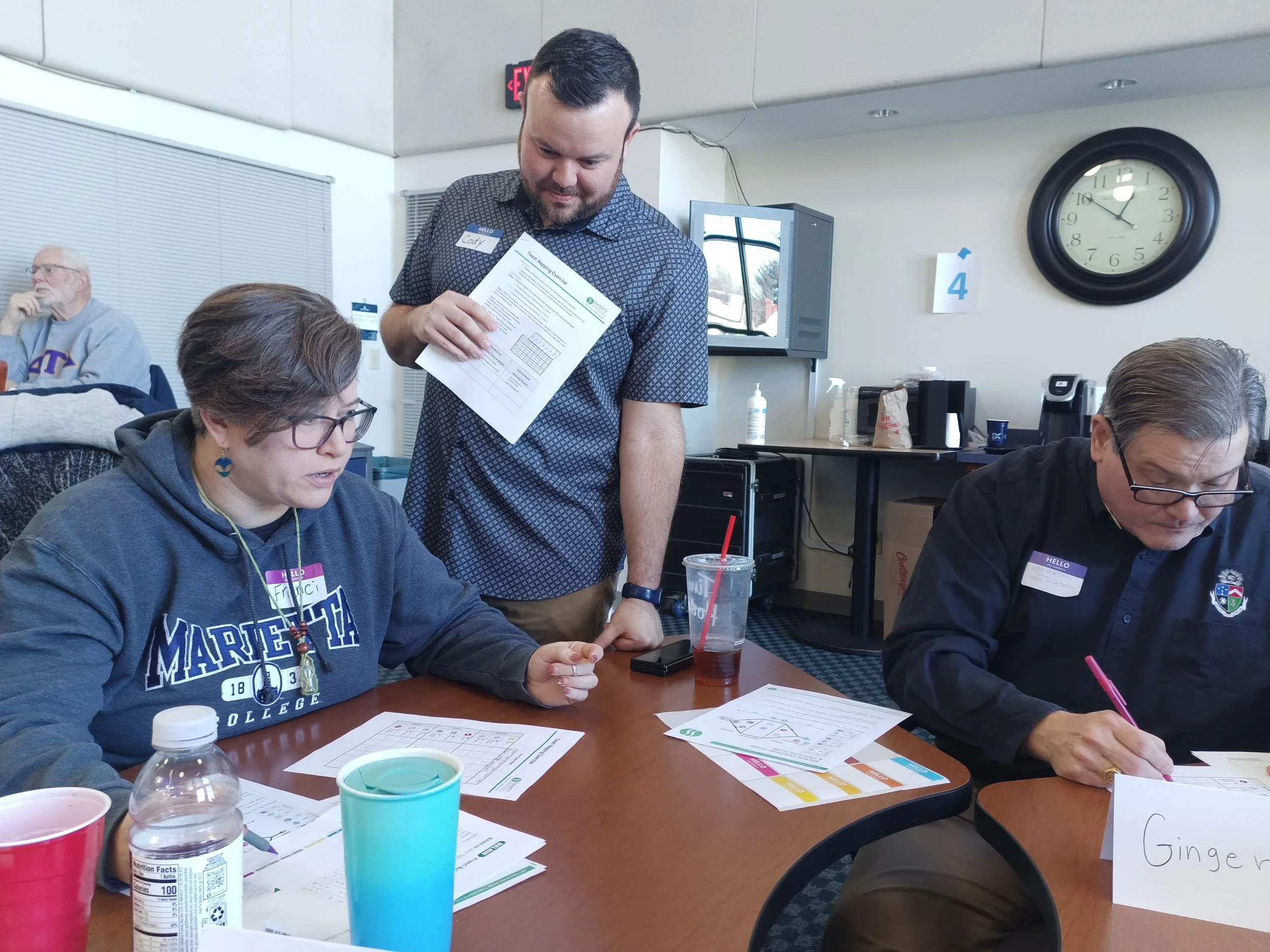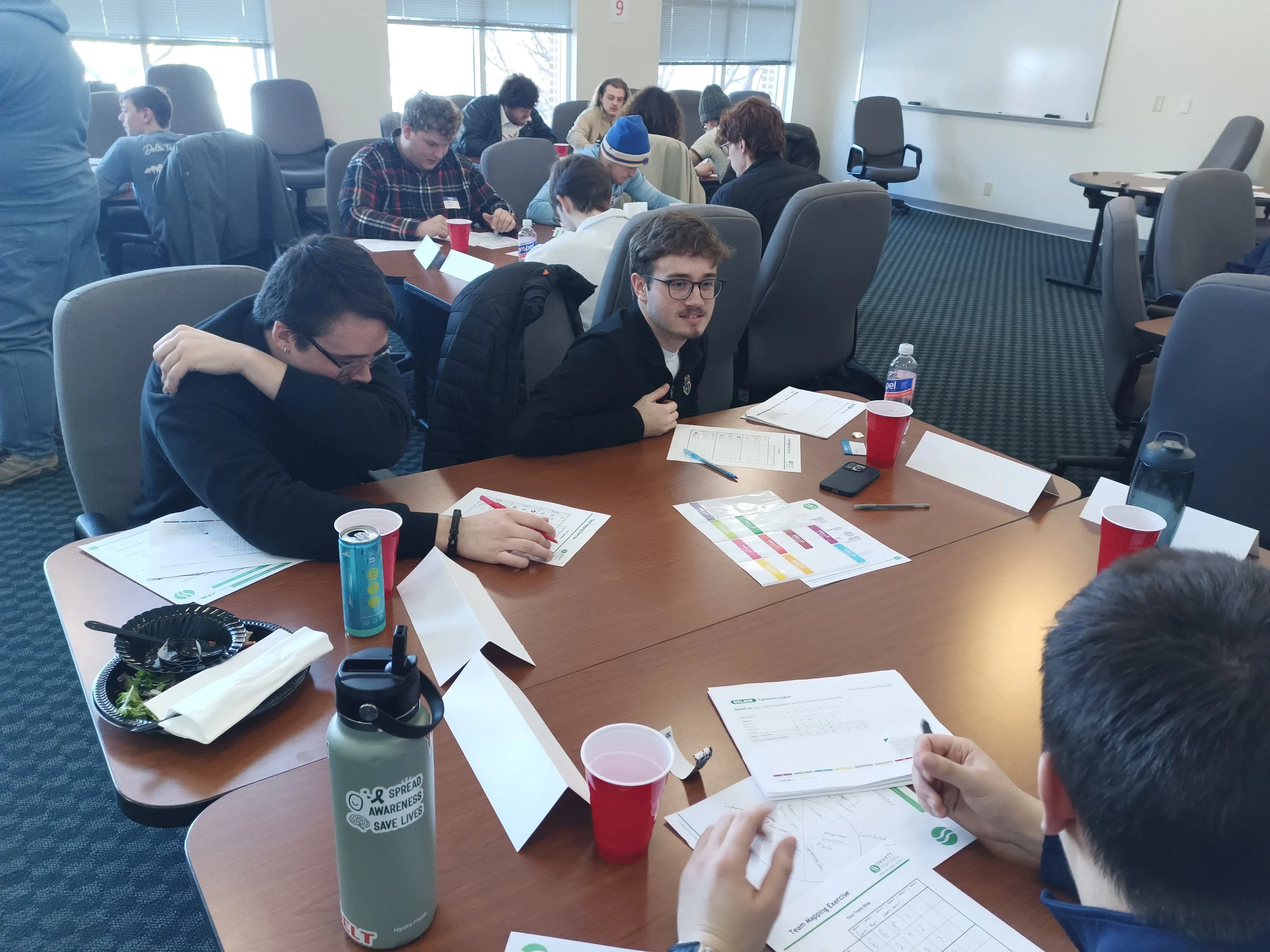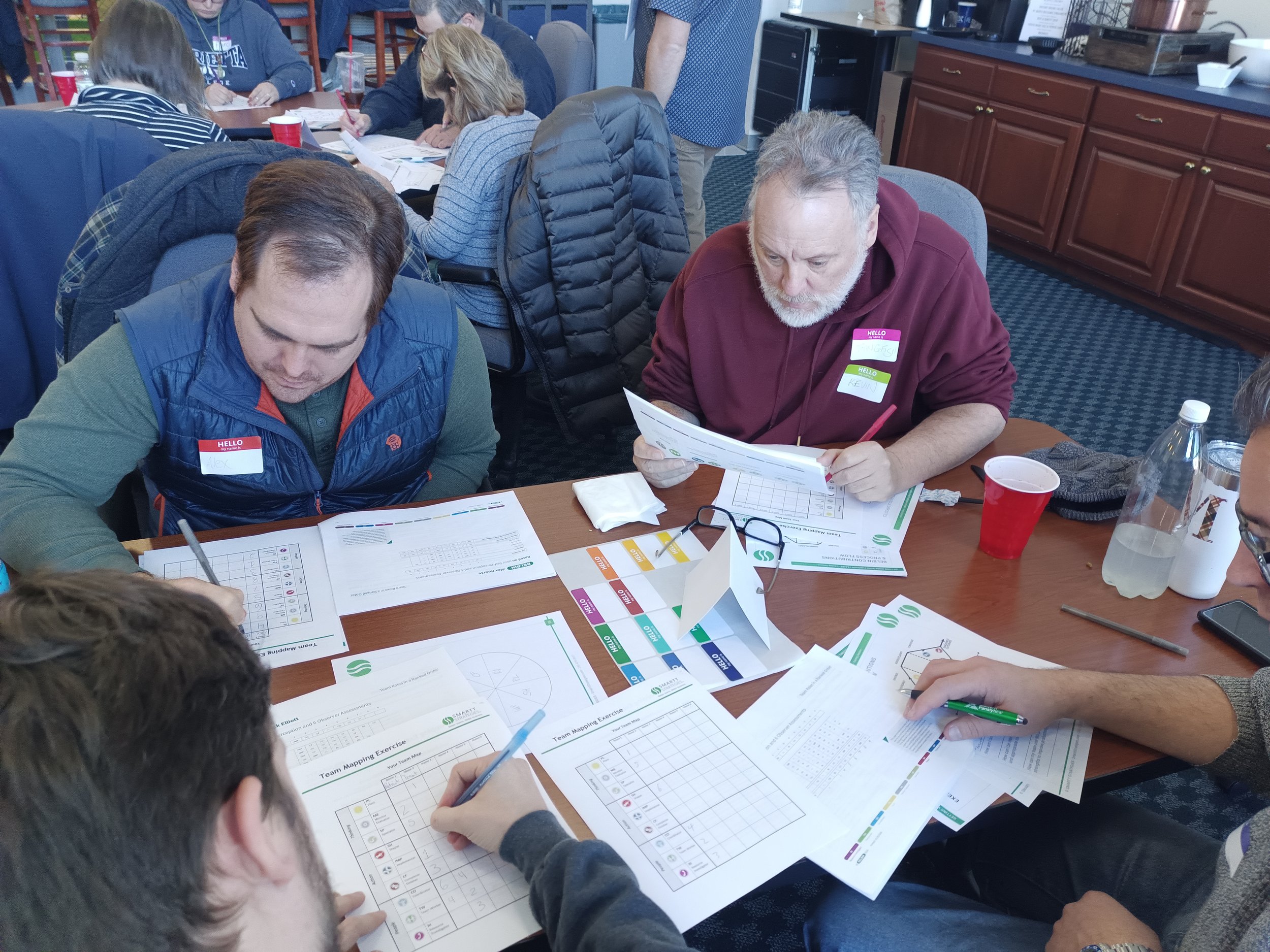
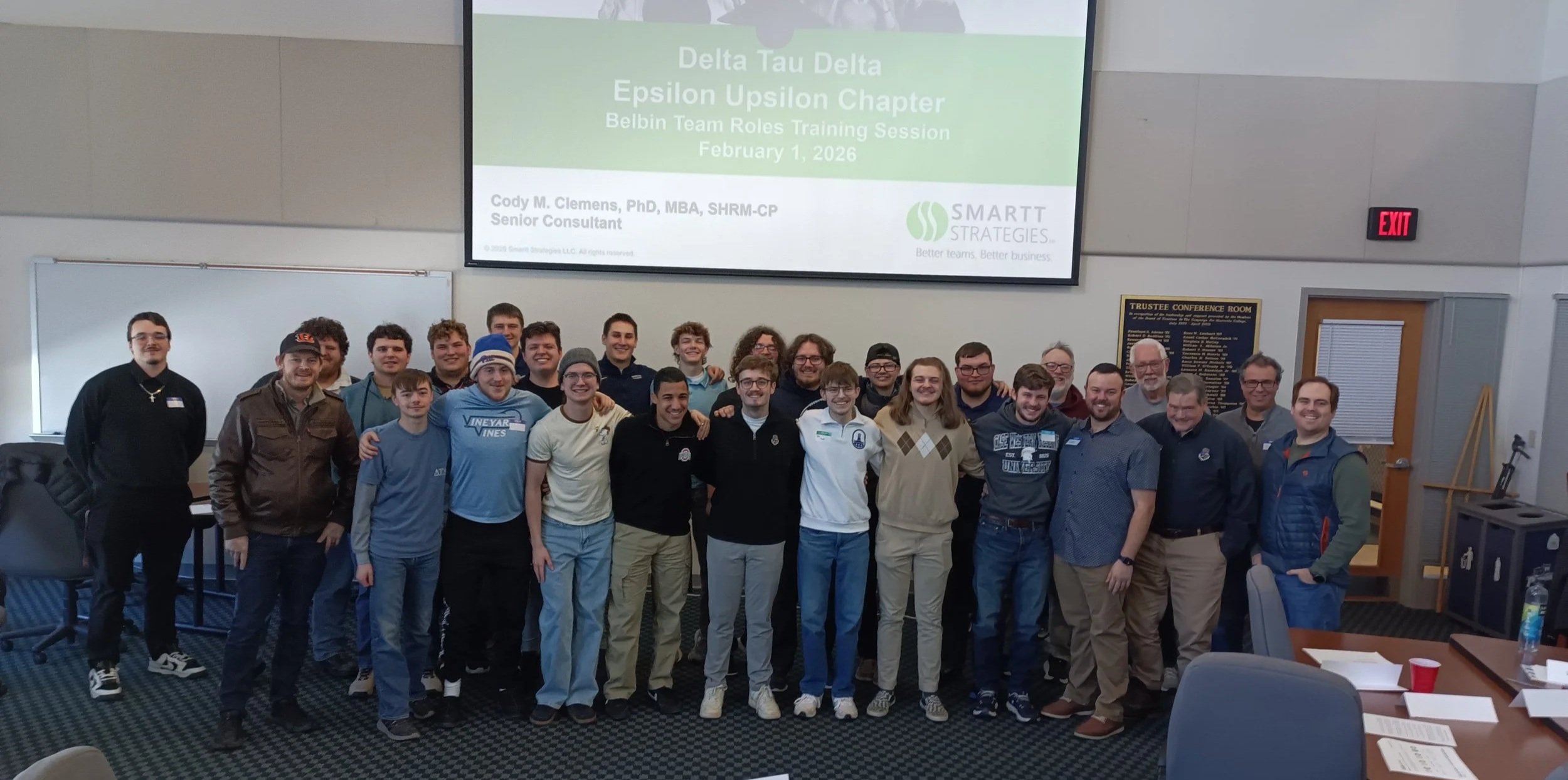
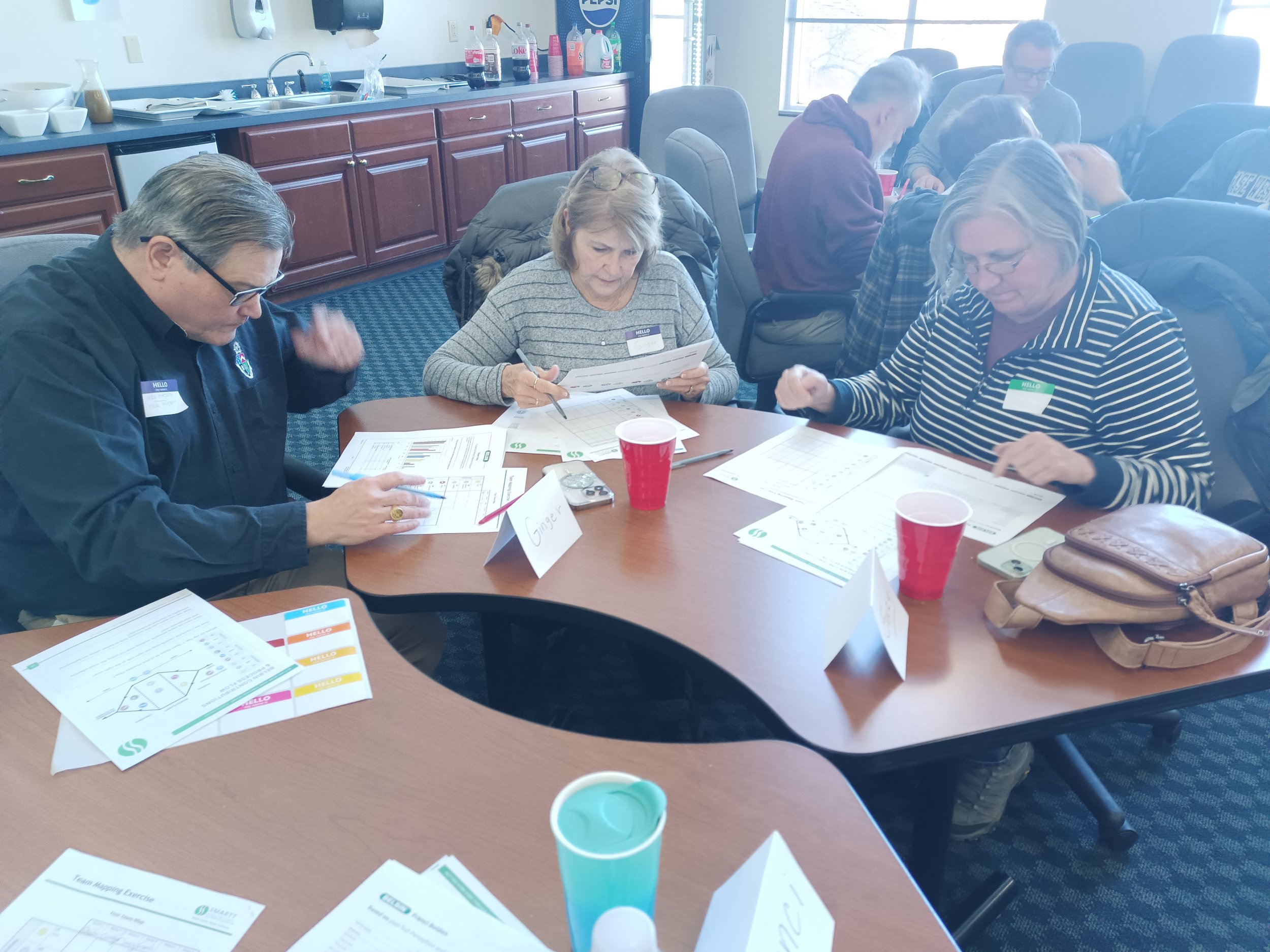
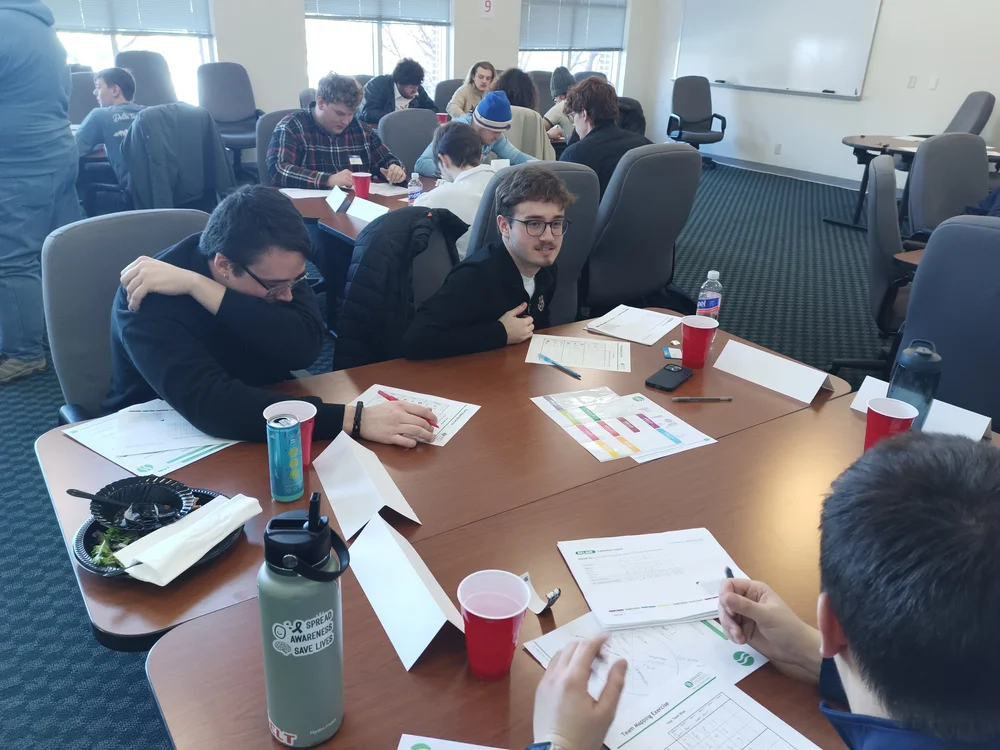
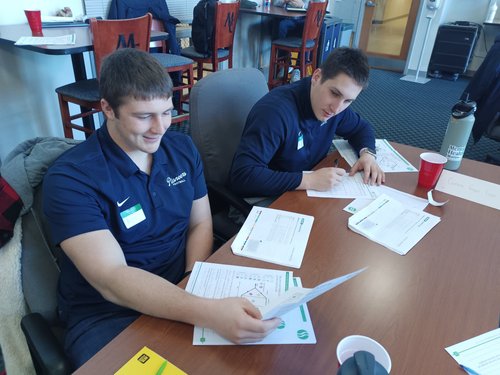
The Undergraduate members of the Epsilon Upsilon Chapter of Delta Tau Delta took part in a 4-hour team training seminar sponsored by the Marietta Delt Educational Foundation on Feb. 1, 2026.
The training is designed to help the Chapter function as a stronger unit by giving the Undergraduate members a better understand of their strengths and weaknesses in a team setting.
Three newer members of the MDEF’s Board of Directors, the two newest officers of the Marietta Delt Alumni Association and two officers from the Marietta Sigma Kappa Chapter’s educational foundation also participated in the team training, alongside the Marietta Delt Undergraduates.
Epsilon Upsilon Chapter Takes Part in Belbin Team Roles Training
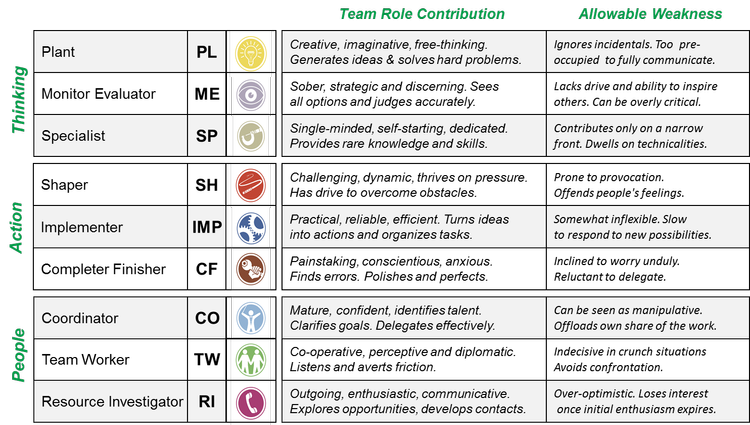
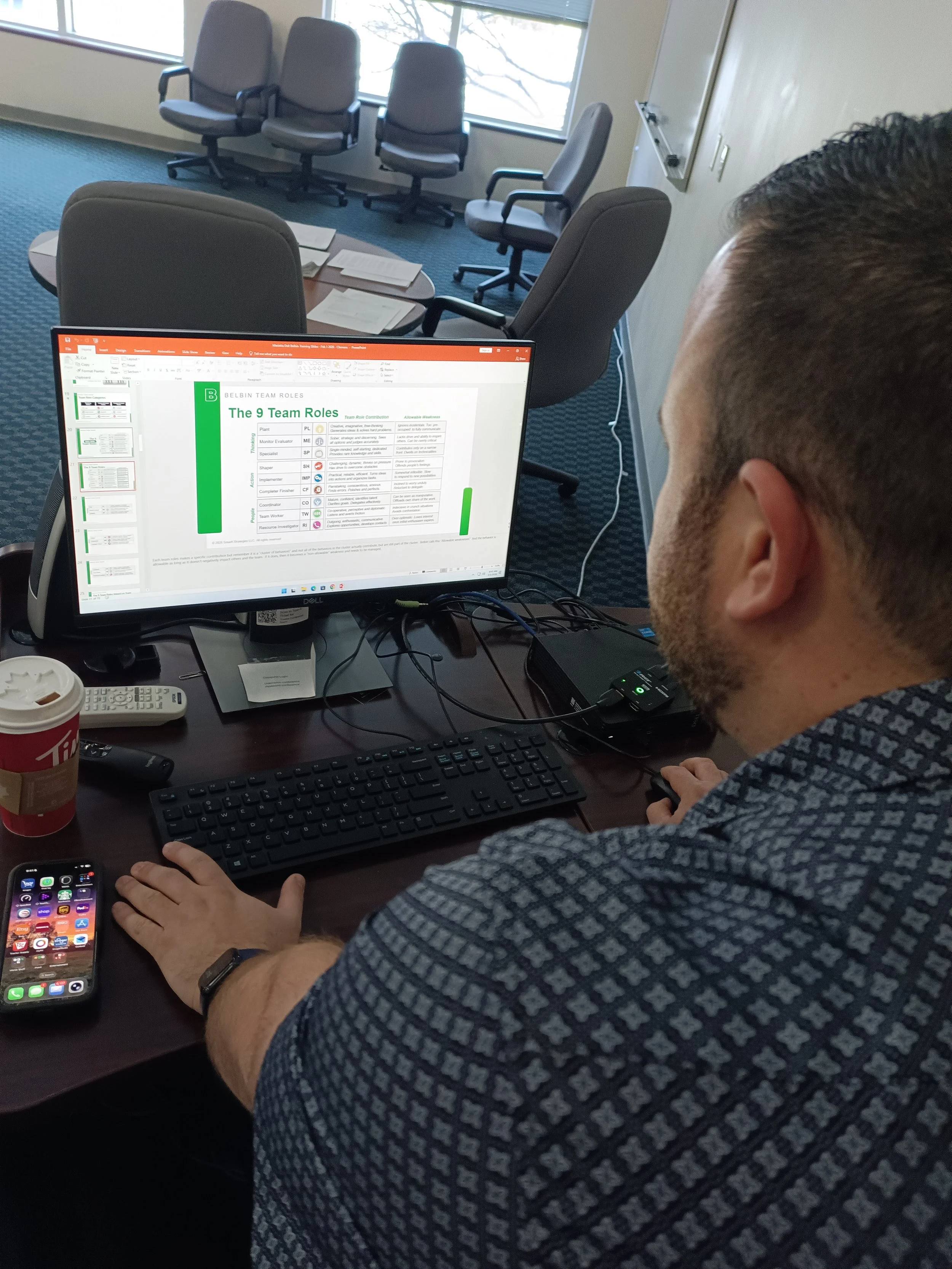
Called Belbin Team Roles, the training theory is a framework developed in the 1970s in the United Kingdom by Dr. Meredith Belbin, a University of Cambridge-educated researcher. He identified nine distinct behavioral roles that individuals adopt in a team setting.
As opposed to a simple personality test, Belbin Team Roles look at behaviors traits that characterize a person. This is done through both a self-assessment and by peer evaluations.
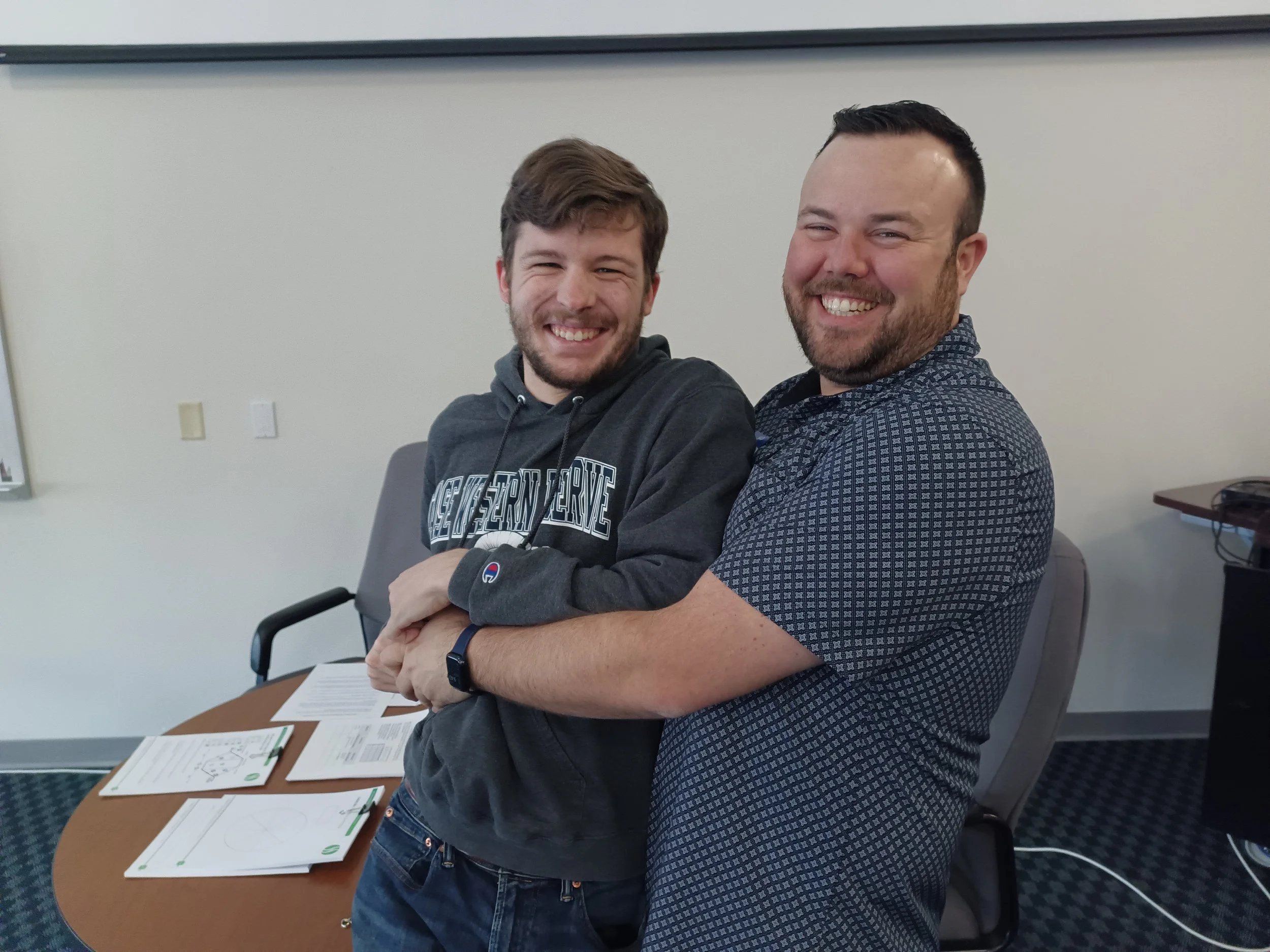
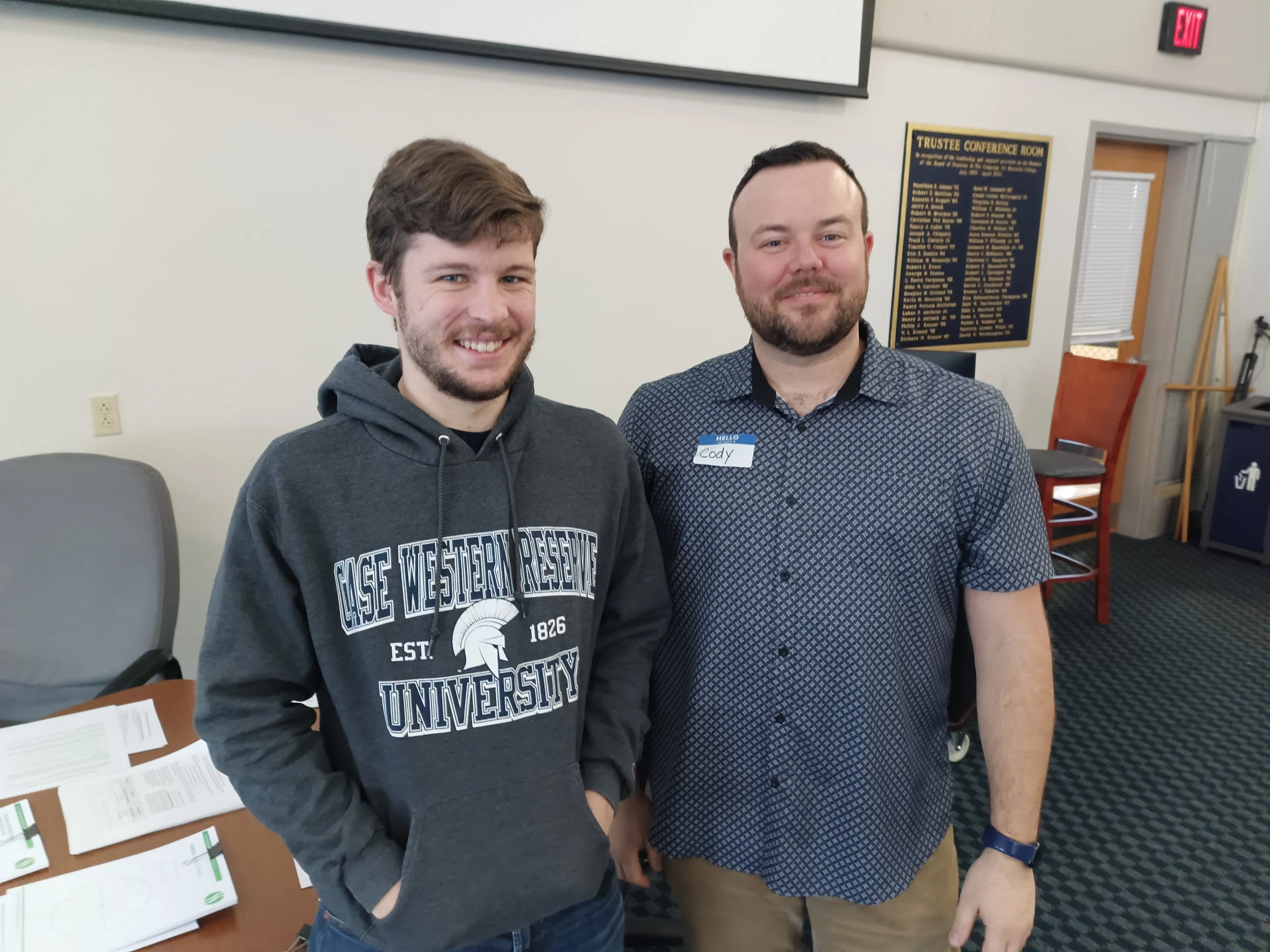
Dr. Cody Clemens ’13 facilitated the training.
In addition to being a graduate of Marietta College and a Marietta Delt Alumnus, he is an instructor in the College of Business at Ohio University. He is also a member of the MDEF Board of Directors.
“When individuals understand their natural contributions and appreciate the strengths of others, teams stop competing internally and start performing collectively,” said Clemens, who is one of a handful of people certified in the United States to teach Belbin Team Roles.
This is the third time since 2021 the MDEF has sponsored this training for the Chapter and for the officers of the MDAA and the MDEF.
For most of the current Undergraduate Delts, it was their first time receiving this training.
MDAA President Alex Nourse ’15 and Vice President Kevin Oliphant ’90 went through the training.
“If we had a program like Belbin when I was an Undergraduate, it would have been eye-opening,” said Nourse. “We would have had more productive conversations and elections might have shaken out differently based on the strengths and opportunities we uncovered during the training.”
All of the MDAA officers and the MDEF executive officers, committee chairs and board members completed the training either in 2021, 2023 or at this most recent session.
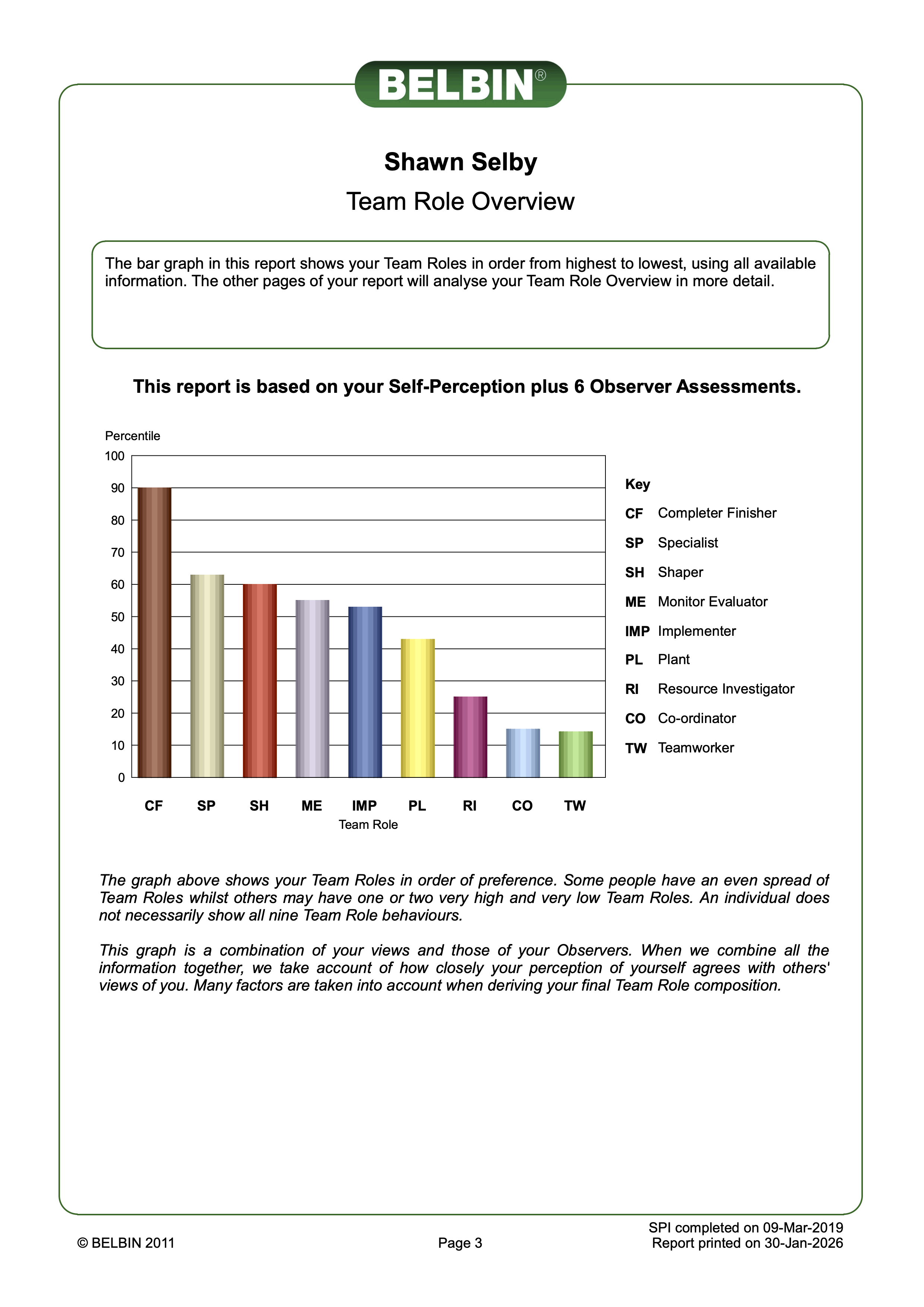
“Both our Alumni Association and our Educational Foundation have been able to do extraordinary things in the relatively short time both entities have existed. Our use of Belbin has certainly played a role in all the Alumni officers and other Alumni leadership volunteers being able to work together efficiently and effectively,” said Shawn Selby ’92, who is the secretary for both the MDAA and the MDEF, and who attended this year’s training to support Clemens.
Selby first went through Belbin training in 2009 while he was living and working in the United Kingdom.
“And it is also important that if we are asking our Undergraduates to undertake a training to help them be a better Chapter and better Delts, that we do so from the position of talking the talk and walking the walk.”

Nourse is excited about what this can mean for the two Alumni organizations that support the Marietta Delts.
“As the MDAA president, I can effectively communicate with my team and make sure we are positioning ourselves for success. Knowing who to incorporate in any certain project along the way is invaluable in ensuring that the Alumni Association is successful and stands the test of time and tradition,” he said.
Epsilon Upsilon Chapter is the first — and so far only — Greek organization in the United States to have received Belbin Team Roles training. The same two facts also hold true for the two Alumni organizations that support Epsilon Upsilon Chapter.
Chapter President Storm Stimmel ’27 is no stranger to being in a position of leadership. He was recently elected to a second term as president, one of only four Epsilon Upsilon Delts to hold that distinction. Still, he sees his outlook on leadership differently after going through the Belbin training.
“This will change the way I approach leadership and teamwork by allowing me to more thoughtfully consider the team styles of every member in the room. It allows me to recognize the strengths of each Brother and will guide me in trying to decide who can assist with what task to ensure it is properly initiated and executed.“
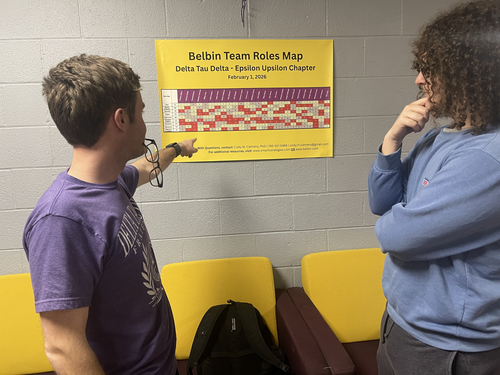
The Undergraduate Delts have received a laminated, poster-size “Team Map” from the MDEF showing the strengths and weaknesses of the members of the Chapter. It is displayed in the Chapter Room to help them keep their newly acquired knowledge about themselves and each other at top of mind.
With this information, the Undergraduate Delts can build stronger committees, ad-hoc teams and executive board to lead among themselves and throughout the Marietta College community.
“The Belbin Team Roles philosophy fits perfectly with the Delt philosophy of becoming better men. When you know your weaknesses, your Brothers can help compensate. When you know your strengths, your Brothers can make sure you have the opportunity to perform and shine. And you get to do the same for your Brothers,” said David Hood ’11, the MDEF treasurer and veteran of the 2023 training, who also attended this year’s training to support Clemens.
Stimmel is hopeful about how the Chapter can benefit from Belbin Team Roles.
“Belbin gave us valuable insight into the strengths of each member, and that will be greatly utilized moving forward.”
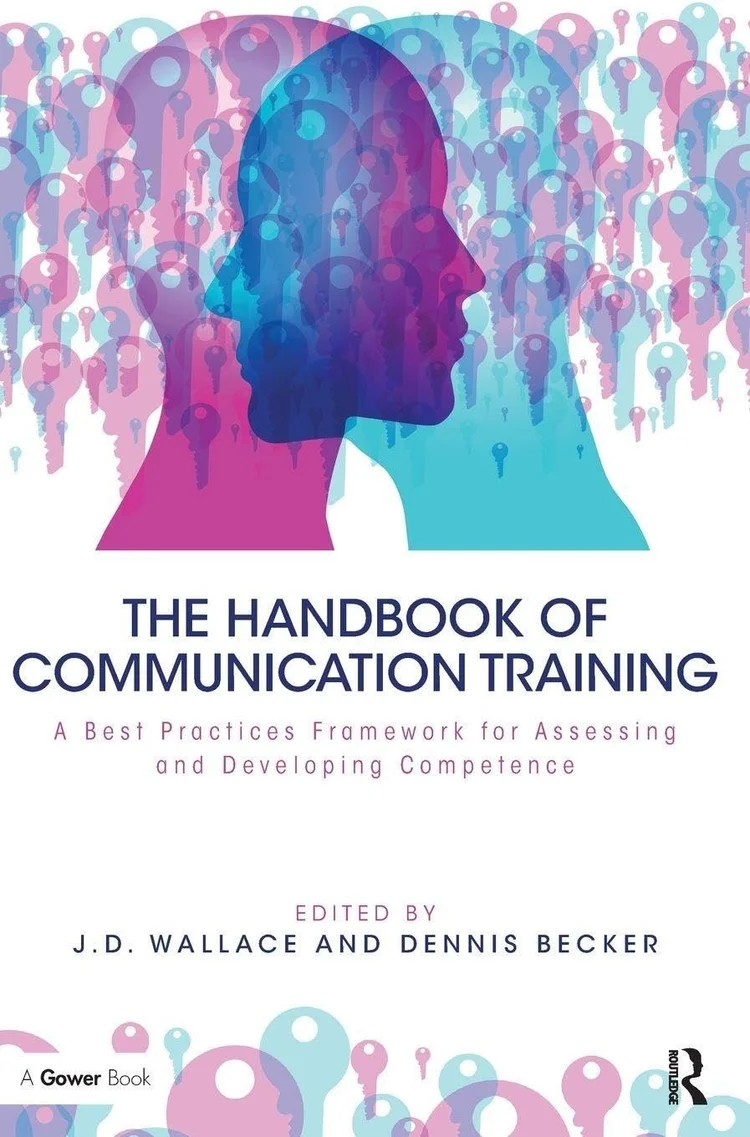
Clemens, who recently co-authored a section about Belbin Team Roles for an academic book, “The Handbook of Communication Training,” knows Belbin Team Roles can unlock the Chapter’s potential.
During the training, he broke the Undergraduate Delts into smaller groups and gave them practical, Chapter-based problems he designed to solve using the Belbin Team Roles approach.
“Belbin Team Roles give Chapters like Epsilon Upsilon a shared language for building intentional teams that maximize strengths, fill gaps, and create environments where every member can contribute to success,” he said.